Creatine supplements for women are worth considering for repeated high-intensity exercise, but a product cannot promise a bloat-free response or a particular strength gain. Creatine monohydrate is the form to evaluate first; decide whether the training goal, label and safety context justify using it. The review of creatine research in women describes both encouraging findings and studies without an additional training benefit.
This article contains affiliate links. We may earn a commission if you buy through them, at no extra cost to you.
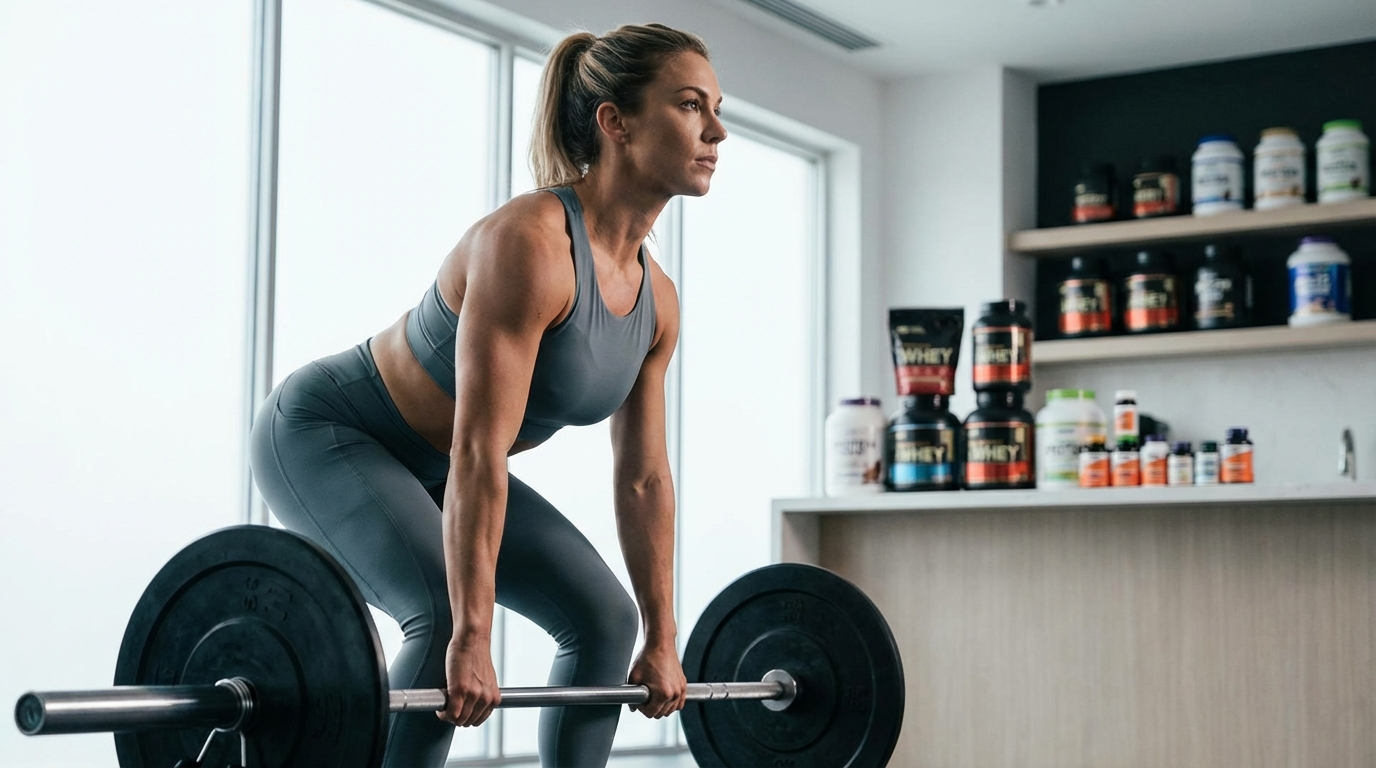
What can creatine supplements for women actually do?
Creatine supplements for women can support strength and repeated high-intensity exercise, but they do not replace training, adequate food or recovery; the relevant question is whether supplementation adds something to your existing routine, not whether a label promises a visibly different body or an immediate change on the scale. review of creatine research in women
Creatine participates in the system that rapidly replenishes energy during demanding muscular work. That explains why a lifting session or repeated sprint effort is a more relevant use case than expecting a powder to make an otherwise inactive day feel energetic. The research review does not show that every woman responds in the same way. review of creatine research in women
Choose an outcome you actually care about before comparing products. If your goal is progressing a resistance-training routine, record the exercise, load and how the session felt; if your goal is weight loss, do not treat a change in water weight as a fat-loss result. Our equipment-free home workout guide provides a separate starting point for planning activity.
Which form and product features should you compare?
Start your comparison with a plainly labelled creatine monohydrate product, then examine the complete ingredient list and the evidence behind any additional ingredients; a product marketed specifically to women does not earn a higher place merely because its packaging mentions hormones, lean muscle or a smaller serving scoop. review of creatine research in women
The table is a buying framework, not a laboratory-tested ranking. We have not purchased these products, checked a batch certificate or established that one retail brand produces better training results than another. A manufacturer’s quality claim should remain separate from a claim about effectiveness. NCCIH supplement-safety guidance
| Format | What to examine | Reason to pause |
|---|---|---|
| Plain monohydrate powder | Identified ingredient, serving information, independent quality documentation | No accessible label or batch information |
| Flavoured powder | Creatine amount separately from the total powder weight | Sweeteners or other ingredients you do not want |
| Capsules | Amount per capsule and complete labelled serving | Comparing capsule count instead of creatine amount |
| Multi-ingredient blend | Amounts and purpose of every active ingredient | Proprietary dosing or unsupported combined-benefit claims |
Micronized wording, a premium container or a longer ingredient list is not, by itself, evidence of a better result. Ask what the extra feature changes for you: mixing, convenience or a documented property of the actual product. Do not pay a premium for an explanation the seller cannot substantiate.
Does creatine inevitably cause bloating or weight gain?
Creatine does not justify either an inevitable-bloating warning or a guaranteed no-bloat promise: individual experience and the regimen matter, and changes in body water are not the same as gaining body fat; if scale changes are distressing, discuss that concern before starting rather than relying on reassuring marketing language. review of creatine research in women
The women’s research review distinguishes changes associated with loading from longer-term training outcomes. It also discusses studies where body weight did not change significantly between groups; those findings cannot be turned into a promise that your weight will stay fixed. A scale alone cannot identify the reason for a change. review of creatine research in women
Consider whether a simpler product makes your own experience easier to interpret. Starting a new supplement alongside a different diet, a new workout programme and several other powders leaves too many moving parts to identify what caused discomfort. Stop using a supplement and seek professional advice if adverse effects occur. NCCIH supplement-safety guidance
Do women need a loading phase or special timing?
A loading phase is not the only strategy described in creatine research, and a faster rise in muscle stores does not guarantee faster progress in the gym; Women should not be handed a separate compulsory regimen simply because a product is sold as female-specific; personal suitability comes before supplement timing. review of creatine research in women
The review describes a daily 5 g approach that increases muscle stores more gradually, over approximately 3–4 weeks, compared with a traditional loading approach. This is a description of the studied strategy, not a prescription for pregnancy, kidney disease or an individual medical condition. Discuss suitability with a qualified professional. review of creatine research in women
Avoid turning timing into another purchase requirement. A product that insists you need several companion supplements, a proprietary carbohydrate mix or a special cycling plan should provide evidence for those additions. The burden is on the seller to justify the complete recommendation, not on you to buy it.
Who should get professional advice before starting?
Get individual advice before using creatine when you are pregnant, breastfeeding, managing a health condition, taking medicines or considering it for a child; Evidence in healthy exercising adults cannot establish safety for every life stage, and a reassuring label cannot replace a review of your own circumstances and current treatment. NCCIH supplement-safety guidance
Pregnancy deserves particular caution. The women’s review discusses biological reasons for research interest but reported no human supplementation studies in pregnancy at the time of publication; that is not permission to self-prescribe. A proposed mechanism and an established maternal or infant benefit are different forms of evidence. review of creatine research in women
Similarly, menopause does not make creatine an osteoporosis treatment. The research includes varied muscle and bone outcomes and important differences between supplementation alone and supplementation alongside resistance training. Bring a specific question to your clinician rather than substituting a sports powder for an existing bone-health plan. review of creatine research in women
How can you decide whether a supplement earns its place?
A useful decision starts with the purpose of the supplement, the quality of the information available and how you will judge whether it remains worthwhile; you do not need to keep buying a product because a testimonial says results eventually arrive, and you should not confuse persistence with proof of benefit.
- Write down the training goal and what you already do to pursue it.
- Read the complete label rather than the front-of-pack slogan.
- Check whether product-quality documentation refers to the product being sold.
- Review suitability and medicines with a clinician or pharmacist when relevant.
- Keep the routine understandable instead of adding several products together.
Protein powders and creatine answer different purchasing questions. Our guide to comparing protein-powder ingredients and quality explains how to assess a protein product without assuming everyone needs one; our practical anti-inflammatory meal guide keeps food choices separate from claims that a supplement heals tissue.
The most defensible verdict is conditional: creatine has a research basis for some exercise goals, while the choice of a particular bottle still requires scrutiny. Evidence for an ingredient is not an endorsement of every product that contains it. NCCIH supplement-safety guidance
What should you know about the commercial links?
Commercial links are optional shopping references, not evidence that a product matches the creatine research or deserves a place in your routine; Read the actual label of any offer independently, and do not infer that a muscle, joint or microbiome product is a substitute for a clearly identified creatine supplement.
The offers below cover different commercial categories. Their presence is not a recommendation to combine them, and this review does not establish the finished formulas’ effectiveness or safety. Apply the same label and suitability checks to each purchase. NCCIH supplement-safety guidance
FAQ: what else should you know?
These questions address practical choices that remain after comparing the evidence, the label and your personal circumstances; the answers are not a substitute for individual advice, and a seller’s satisfaction policy should not be used as a reason to overlook uncertainty about a supplement or a change in your health.
Does creatine for women cause weight gain?
It can change scale weight, and the research review describes water-related changes with loading. That does not establish a fixed response for you or show that a change is body-fat gain. review of creatine research in women
Is creatine for women safe?
Evidence from healthy exercising adults does not answer every personal safety question. Pregnancy, breastfeeding, medicines and medical conditions need an individual discussion rather than a blanket reassurance. NCCIH supplement-safety guidance
Is creatine for women different from creatine for men?
A women-specific label does not establish a special clinical advantage. Compare the actual ingredient and product information rather than paying for the gender description alone.
How much creatine should women take per day?
The women’s review describes a daily 5 g strategy, but a studied strategy is not a prescription for every person. Discuss suitability and the actual product before turning a research amount into your routine. review of creatine research in women