Ashwagandha supplements for stress may help some people, but the evidence does not establish a best retail brand or a guaranteed cortisol-reset protocol. Safety screening matters as much as the product comparison. The NCCIH ashwagandha guidance supports a limited, preparation-specific discussion of stress and insomnia, while noting uncertainty about anxiety.
This article contains affiliate links. We may earn a commission if you buy through them, at no extra cost to you.
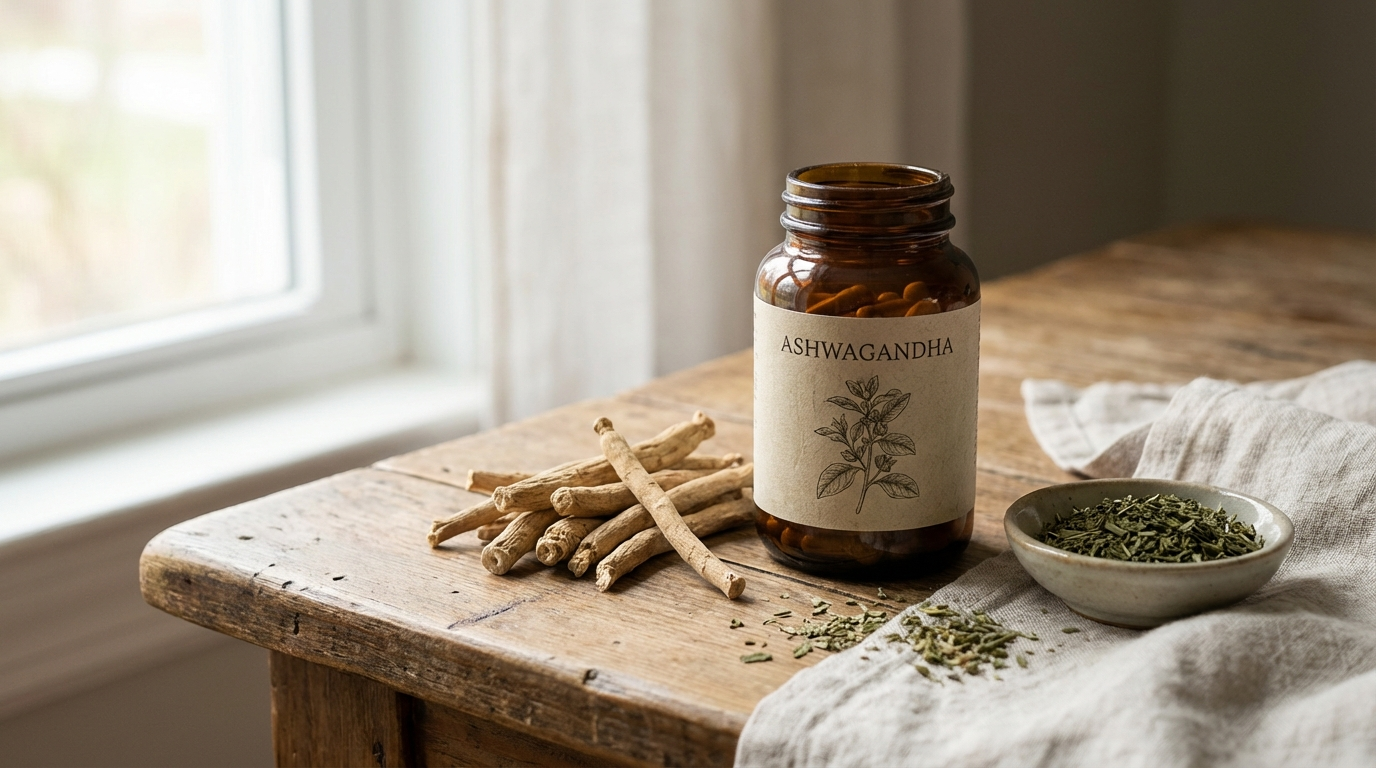
Can ashwagandha supplements for stress actually help?
Some ashwagandha preparations may help with stress and insomnia, but the evidence does not justify treating every extract as equivalent or presenting the herb as a treatment for an anxiety disorder; a decision should connect the actual preparation, the problem being addressed and the limits of the available research. NCCIH ashwagandha guidance
Ashwagandha is also called Withania somnifera. The public evidence summary describes trials using different preparations and often small study populations, which makes a sweeping claim about an entire shelf of products inappropriate. An encouraging finding for a particular extract does not validate every powder, gummy or combination formula. NCCIH ashwagandha guidance
Start with the question you want answered. Occasional pressure at work, persistent insomnia and symptoms of an anxiety disorder are not interchangeable purchasing scenarios; a promise to lower a biomarker does not show that the product will solve the problem affecting your daily life.
How should you compare root powders and extracts?
Compare the actual label rather than choosing by the biggest milligram number: a root powder, a root extract and a root-and-leaf extract are different descriptions, not automatically interchangeable servings; the seller should identify the plant material, preparation, labelled amount and any other active ingredients clearly enough for a meaningful discussion. NCCIH ashwagandha guidance
Branded extract names may help identify what a study tested, but the name alone does not establish that a different retail blend reproduces the study’s outcome. Likewise, a standardized-content statement does not by itself establish clinical benefit or guarantee product consistency. Ask to see the supporting documents. NCCIH supplement-safety guidance
| Label feature | Useful question | What it cannot prove |
|---|---|---|
| Root powder | What material and amount are supplied? | Equivalence to a concentrated extract trial |
| Named extract | Is this the preparation used in the cited study? | That all people will benefit |
| Standardization statement | What is measured, and where is the documentation? | Independent verification of the bottle |
| Combination formula | Are all ingredient amounts disclosed? | That combining them improves results |
A useful shortlist can therefore remain unranked. We have not purchased products, verified batch certificates or compared brands in a clinical trial, so a numerical rating or best-for-women award would imply evidence we do not have.
Who should avoid ashwagandha or seek advice first?
Ashwagandha is not a harmless default for everyone: pregnancy, breastfeeding, thyroid or autoimmune disorders, an upcoming operation and certain medicines all change the safety discussion; Screen for those circumstances before comparing flavours or extract strengths, and bring the full label to the professional who knows your treatment history. NCCIH ashwagandha guidance
NCCIH advises avoiding ashwagandha during pregnancy and not using it while breastfeeding. It also does not recommend it for people with autoimmune or thyroid disorders or those about to have surgery; people with hormone-sensitive prostate cancer should avoid its use. These cautions should not be hidden below a purchase button. NCCIH ashwagandha guidance
Potential medicine interactions include diabetes and blood-pressure treatments, sedatives, anticonvulsants, immunosuppressants and thyroid hormone medicines. Do not assume that taking an herb at a different time automatically resolves an interaction. A pharmacist needs the names and labels of the actual products involved. NCCIH ashwagandha guidance
What side effects and long-term limits matter?
The safety discussion needs to include digestive symptoms, drowsiness and reports of liver injury, not just a statement that the herb is natural; Short-term research does not establish indefinite daily safety, and the absence of discomfort immediately after a dose cannot rule out a problem developing later. NCCIH ashwagandha guidance
NCCIH describes possible short-term safety up to 3 months and says there is insufficient information to conclude that long-term use is safe. That is an evidence boundary, not a recommended duration for every reader or a reason to continue until that point despite adverse effects. NCCIH ashwagandha guidance
Drowsiness, stomach upset, diarrhea and vomiting are reported possible effects, and liver injury has been linked to ashwagandha supplements in a number of cases. If you develop side effects, stop the supplement and contact a health professional rather than accepting a seller’s explanation that discomfort means it is working. NCCIH ashwagandha guidance NCCIH supplement-safety guidance
Should you combine it with magnesium or other products?
Do not assume that combining ashwagandha with magnesium, sleep aids or other stress products makes a better plan: each addition introduces another product to assess and makes a change harder to interpret; an appealing list of ingredients is not evidence that the complete combination has been tested for your circumstances. NCCIH supplement-safety guidance
The practical problem is attribution as well as safety. If you change several supplements while changing caffeine intake and bedtime, feeling better or worse does not identify which change mattered. A clinician or pharmacist can help you decide whether any supplement has a clear purpose before another is added.
Our natural sleep supplement evidence guide discusses a separate buying decision; it should not be read as an instruction to build a stack. For non-product context, use our practical guide to reducing stress naturally and flexible morning routine guide rather than treating a shopping list as a complete stress-management plan.
What should you check before spending money?
Before buying ashwagandha, require a clear label, a plausible connection between the evidence and the preparation being sold, and a safety discussion relevant to you; Decline an offer that depends on guaranteed calm, an unexplained hormone reset or pressure to commit to several bottles before those questions are answered.
- Identify the problem you want help with and whether professional assessment is needed.
- Read the plant part, preparation and full ingredient list.
- Ask whether the cited research tested that preparation or a different product.
- Have medicines and relevant health conditions reviewed.
- Read payment, cancellation and refund terms before ordering.
An outcome worth discussing is how the problem affects life, not a seller’s impressive-sounding mechanism. If work, sleep or relationships remain affected, do not keep escalating supplement purchases because a chart promises a future benefit. Research on stress does not remove the need to seek appropriate help.
This review is a documentary assessment of public health information, not a personal treatment protocol. We have not measured readers’ cortisol, tested a bottle or verified the exact contents of any commercial blend, and our purchase caution reflects those limits.
How should you read the commercial offers?
Treat commercial offers as separate products to evaluate, not as evidence that an ashwagandha routine needs a muscle formula or a gut-health product; the presence of a shopping link does not show that the linked preparation matches an ashwagandha trial or that taking several products together has an established benefit.
We do not recommend a combined protocol based on those links. Check each complete label and discuss the full list of intended supplements when you seek a medicine-interaction review; a category name is not enough information for that assessment. NCCIH supplement-safety guidance
FAQ: what else should you know?
The questions below focus on decisions shoppers often face after encountering an ashwagandha label or stress claim; They should help you separate a product description from a clinical conclusion, without assigning a dose or promising that a particular extract will solve an individual sleep, mood or stress problem by a deadline.
Does ashwagandha work immediately for stress?
The public evidence summary does not establish an immediate effect from any retail product. Do not turn its preparation-specific findings into a promise of emergency relief or a guaranteed result by a deadline. NCCIH ashwagandha guidance
Is ashwagandha useful for stress and anxiety?
NCCIH separates possible stress and insomnia effects from unclear evidence about anxiety. That distinction matters if a seller presents all of those concerns as the same treatment target. NCCIH ashwagandha guidance
How much ashwagandha should I take for stress?
This review does not establish a universal dose across root powders and different extracts. Bring the precise product and your medicines to a qualified professional rather than borrowing an amount from a different formulation.
Can women take ashwagandha for stress?
It is not automatically suitable just because it is sold to women. NCCIH advises avoidance during pregnancy and not using it while breastfeeding, alongside its other cautions. NCCIH ashwagandha guidance