The short answer is nuanced: a handful of supplements, specifically zinc, magnesium, melatonin, and vitamin B12, have genuine clinical evidence behind them, but none of them “cures” tinnitus permanently. If you are researching the best supplements for tinnitus relief 2026, this guide cuts through the marketing noise to tell you exactly what the research shows, what reasonable expectations look like, and which ingredients are worth your money versus which ones are merely hype. For those comparing specific commercial products, see our detailed breakdown: Audifort vs Silencil vs Quietum Plus: 2026 Shocking Truth.
Tinnitus affects roughly 15% of adults worldwide, according to the American Tinnitus Association, making it one of the most common sensory disorders on the planet. Despite its prevalence, there is no FDA-approved drug that eliminates tinnitus, which is why millions of people turn to dietary supplements every year. The global tinnitus treatment market was valued at over $1.1 billion USD in 2023, and it is projected to keep growing through the end of the decade as the population ages and noise exposure increases. As we move into 2026, the focus is shifting towards personalized nutrition and targeted antioxidant support rather than blanket remedies. This guide covers seven evidence-ranked supplements, how to evaluate combination formulas, what red flags to avoid, realistic costs, and a complete FAQ. Every claim here is grounded in peer-reviewed studies, not manufacturer marketing copy.
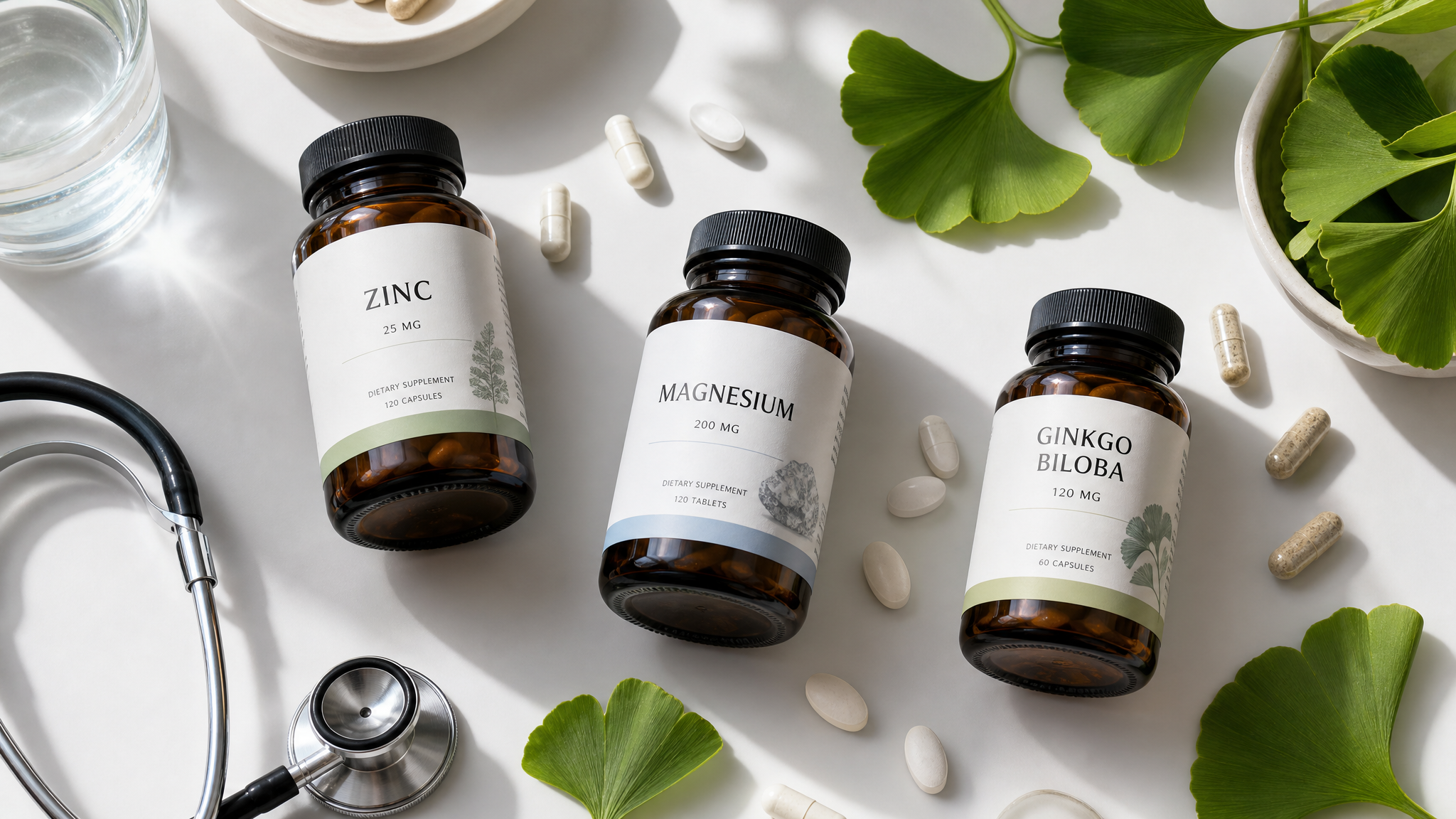
What Causes Tinnitus and Can Supplements Actually Help?
Before spending money on supplements, it is worth knowing what type of tinnitus you have, because the underlying cause determines whether supplements can play any meaningful role at all. Tinnitus is broadly divided into two categories, and understanding the distinction is critical for effective management:
- Subjective tinnitus: Sound heard only by the patient, typically caused by noise-induced hearing loss, age-related hearing decline, ear infections, or medication side effects. This is by far the most common form and the type most likely to respond to nutritional support.
- Objective tinnitus: Sound that can also be detected by an examiner using specialized equipment, usually linked to a blood vessel abnormality or muscle spasm near the ear. This form is rare and generally requires imaging studies and specialist intervention, not supplements.
Most supplements target subjective tinnitus linked to cochlear oxidative stress, poor inner-ear blood flow, or nutrient deficiencies. If your tinnitus appeared suddenly, is limited to one ear, or accompanies hearing loss, dizziness, or ear pain, see an ENT (ear, nose, and throat specialist) before reaching for any supplement.
A 2022 systematic review published in Frontiers in Aging Neuroscience confirmed that lifestyle and metabolic factors, chronic noise exposure, cardiovascular disease, metabolic syndrome, and specific nutritional deficiencies, are strongly associated with tinnitus severity. Addressing those root factors is more important than any single supplement, and in some cases a doctor-ordered blood panel will reveal an actionable deficiency before you spend a dollar on supplements. Understanding the biological mechanism—whether it is neural hyperactivity or physical damage—helps set realistic expectations for what nutrients can achieve. In 2026, functional medicine approaches are increasingly recommending blood tests for zinc, B12, and magnesium levels prior to supplementation.
Which Supplements Have Clinical Evidence for Tinnitus Relief?
The supplements below are ranked loosely by quality of evidence. The top three have the strongest clinical backing for tinnitus specifically. The remainder have plausible biological rationales and supporting data, but the human trial evidence is thinner. No supplement on this list has been proven in large-scale, well-controlled trials to eliminate tinnitus entirely, but several have shown meaningful reductions in severity scores or in associated problems like disrupted sleep.
1. Zinc
Zinc is the most studied single-nutrient intervention for tinnitus, and the biology makes sense: the cochlea contains one of the highest concentrations of zinc in the human body. Zinc deficiency disrupts cochlear enzyme function and the production of stria vascularis fluid that the inner ear depends on to function properly.
A 2019 clinical trial published in The American Journal of Otolaryngology found that zinc supplementation at 50 mg daily for two months significantly reduced subjective tinnitus loudness scores in patients with confirmed low serum zinc. Patients with normal zinc levels showed little benefit, which is an important point. Zinc supplementation makes the most clinical sense when deficiency is confirmed, not as a universal tinnitus remedy.
Typical dosage: 25–50 mg elemental zinc daily, taken with food to reduce stomach upset. Do not exceed 40 mg daily long-term without medical supervision, excess zinc impairs copper absorption and can create secondary problems.
Best form: Zinc picolinate or zinc glycinate, both of which are substantially better absorbed than inexpensive zinc oxide.
2. Magnesium
Magnesium protects the auditory nerve from excitotoxicity, the type of nerve damage that occurs when excessive glutamate signaling fires after loud noise exposure. A 1994 double-blind RCT published in The American Journal of Otolaryngology showed that magnesium supplementation reduced both noise-induced hearing loss and tinnitus symptoms in participants exposed to high-intensity noise. Subsequent animal studies have reinforced the cochlear-protective mechanism.
What makes magnesium even more relevant in 2026: the National Institutes of Health estimates that approximately 48% of Americans consume less magnesium than the recommended dietary allowance. Stress, alcohol, high sugar intake, and diuretic medications all deplete magnesium further. Many tinnitus patients are quietly deficient before they ever notice.
Typical dosage: 200–400 mg daily as magnesium glycinate or magnesium citrate, both of which have good bioavailability and minimal laxative effect. Avoid magnesium oxide, it is the most common form in cheap supplements and has poor absorption.
3. Melatonin
Melatonin does not directly silence the sound of tinnitus, but it significantly improves sleep quality in people whose tinnitus disrupts sleep, which describes the majority of moderate-to-severe tinnitus sufferers. Poor sleep amplifies tinnitus perception and emotional reactivity to it, creating a vicious feedback loop. Breaking that cycle with melatonin can make tinnitus feel substantially less intrusive day-to-day, even when the sound itself has not changed.
A 2019 meta-analysis in the journal Nutrients reviewed five randomized controlled trials and concluded that melatonin supplementation produced statistically significant reductions in tinnitus loudness ratings and improved sleep scores compared to placebo, particularly in patients with moderate-to-severe tinnitus. This is among the most consistent positive findings for any supplement in this category.
Typical dosage: 3 mg taken 30–60 minutes before bed. Some tinnitus-specific studies used up to 6 mg nightly. Start at 3 mg and increase only if needed, as higher doses do not always produce proportionally better results and can cause morning grogginess.
4. Vitamin B12
Vitamin B12 deficiency has been found in a disproportionately high share of tinnitus patients across multiple clinical studies. B12 is essential for myelin sheath integrity, the protective fatty coating around nerve fibers, including the auditory nerve. Damage to that sheath slows or distorts neural signal transmission, which can contribute to phantom auditory noise.
Who is most at risk for deficiency: Vegans and vegetarians (B12 comes almost exclusively from animal products), adults over 50 (absorption declines with age), and people taking metformin or proton pump inhibitors long-term.
5. Ginkgo Biloba
Ginkgo biloba is probably the most widely marketed herbal supplement for tinnitus in Europe, where it has been used clinically for decades. Its proposed mechanisms include improving microcirculation in the inner ear and providing antioxidant protection to cochlear tissue. The clinical evidence, however, is genuinely mixed. A 2013 Cochrane systematic review concluded there was insufficient evidence to support ginkgo biloba for tinnitus in the general population. A more recent 2021 analysis suggested a modest benefit specifically in older adults with tinnitus related to cognitive decline or vascular issues.
Important interaction: Ginkgo biloba has meaningful blood-thinning properties. Do not combine it with warfarin, aspirin, clopidogrel, or any other anticoagulant without medical clearance first.
6. N-Acetyl Cysteine (NAC)
NAC is a direct precursor to glutathione, the body’s principal antioxidant. The cochlea is highly vulnerable to oxidative damage from loud noise, certain drugs, and normal aging. NAC restores glutathione in cochlear cells and has shown protective effects in multiple animal models of noise-induced hearing loss. Human evidence is more targeted, making NAC more valuable as a preventive tool than a treatment for long-standing tinnitus.
7. Alpha Lipoic Acid (ALA)
Alpha lipoic acid is both water- and fat-soluble, which gives it access to every cell compartment, including the mitochondria inside cochlear hair cells, where most oxidative damage from noise occurs. It also regenerates other antioxidants including vitamins C and E. ALA is generally well tolerated at 200–600 mg daily. People with thiamine (B1) deficiency should be cautious, as ALA can increase B1 demand.