Perimenopause Symptoms in Your 30s: 9 Proven Warning Signs
Perimenopause can start in your 30s, marked by nine key signs like irregular periods, sleep issues, and mood swings. Early recognition allows for proactive management, lifestyle adjustments, and informed healthcare discussions to preserve quality of life and long-term health. While often associated with women in their late 40s, understanding perimenopause symptoms in your 30s is crucial for those experiencing early ovarian aging. This comprehensive guide details the physiological changes, warning signs, and evidence-based strategies to navigate this transition effectively. Ignoring these signs can lead to unnecessary stress and missed opportunities for medical intervention that protects bone density and cardiovascular health. Recognizing the subtle shifts in your body now can empower you to make informed decisions about your future well-being.
Many women dismiss early symptoms as stress or burnout, delaying diagnosis. However, identifying these changes early provides a window of opportunity to optimize nutrition, stress management, and medical support before the transition intensifies. Whether you are planning a family or focusing on your career, knowing what to expect reduces anxiety and helps you maintain control over your health trajectory. The following sections break down the specific physiological markers and actionable steps you can take today to address the nine most common warning signs of early perimenopause.
What Is Perimenopause and Why Can It Start in Your 30s?
Perimenopause is the natural biological transition leading to menopause, defined as the point 12 months after a woman’s final menstrual period. While often associated with the late 40s, this phase can begin much earlier. According to the North American Menopause Society (NAMS), approximately 5% to 10% of women experience the onset of perimenopause in their mid-to-late 30s. This early transition is driven by a decline in ovarian reserve, leading to erratic fluctuations in key hormones like estrogen and progesterone. These hormonal shifts can trigger a wide array of physical and emotional symptoms years before menopause is officially reached.
Several factors influence early onset. Genetics play a significant role; having a mother or sister who experienced early menopause can increase one’s risk by up to 40%. Lifestyle and health factors are also critical. For instance, smoking has been shown to accelerate ovarian aging, potentially bringing on perimenopause 1 to 2 years earlier. Certain medical conditions, including autoimmune disorders like lupus or rheumatoid arthritis, and treatments such as chemotherapy or pelvic radiation, can also precipitate early ovarian decline. Understanding that perimenopause is a multi-year process—often lasting 4 to 8 years—is vital for women in their 30s who may be navigating career peaks and family planning simultaneously. Awareness is the first step toward managing perimenopause symptoms in your 30s effectively.
1. Are Your Menstrual Cycles Becoming Irregular?
Irregular menstrual cycles are frequently the first and most telling sign of perimenopause in your 30s. This manifests as cycles that shorten to less than 21 days or lengthen beyond 35 days, with flow varying from scant spotting to excessively heavy bleeding. The underlying cause is hormonal instability. As ovarian function declines, the body may skip ovulation (anovulatory cycles), leading to insufficient progesterone production. This hormone is crucial for regulating the uterine lining’s shedding. Without it, cycles become unpredictable and often heavier.
A pivotal 2017 study published in the journal Human Reproduction found that women with reduced levels of anti-Müllerian hormone (AMH), a key marker of ovarian reserve, exhibited significant menstrual cycle variability up to a decade before menopause. Tracking your cycle with applications like Clue or Flo can provide objective data, revealing patterns such as skipped periods or prolonged bleeding episodes that are hallmarks of this transition. Consistent tracking helps distinguish between normal variation and significant hormonal shifts.
When to Consult a Healthcare Provider: Seek medical advice if you experience cycles consistently shorter than 21 days, bleeding that lasts more than 7 days, or bleeding between periods. These symptoms could also indicate other conditions like uterine polyps, fibroids, or thyroid disorders. Diagnostic evaluation often includes a follicle-stimulating hormone (FSH) blood test on day 3 of your cycle. In perimenopause, FSH levels often rise above 10 mIU/mL, though they can fluctuate. An AMH test can also provide insight into ovarian reserve.
Evidence-Based Management Strategies:
- Dietary Adjustments: Increasing intake of omega-3 fatty acids from sources like salmon or flaxseeds may help modulate inflammation and support hormonal balance.
- Iron Intake: Ensuring adequate iron intake—18 mg daily as recommended by the National Institutes of Health (NIH) for premenopausal women—is crucial to counteract iron loss from heavy bleeding and prevent anemia.
- Medical Intervention: For some women, low-dose hormonal contraceptives or progesterone therapy may be prescribed to regulate cycles and reduce bleeding volume.
2. Is Your Sleep Disrupted by Insomnia or Night Wakings?
Sleep disturbances in perimenopause often involve waking between 2 a.m. and 4 a.m. with difficulty returning to sleep, or experiencing non-restorative sleep despite adequate time in bed. This is distinct from stress-related insomnia. Research from a 2019 meta-analysis in Sleep Medicine Reviews concluded that perimenopausal women report 30% to 40% poorer sleep quality compared to their premenopausal peers, primarily due to hormonal shifts. Poor sleep can exacerbate other symptoms like mood swings and brain fog.
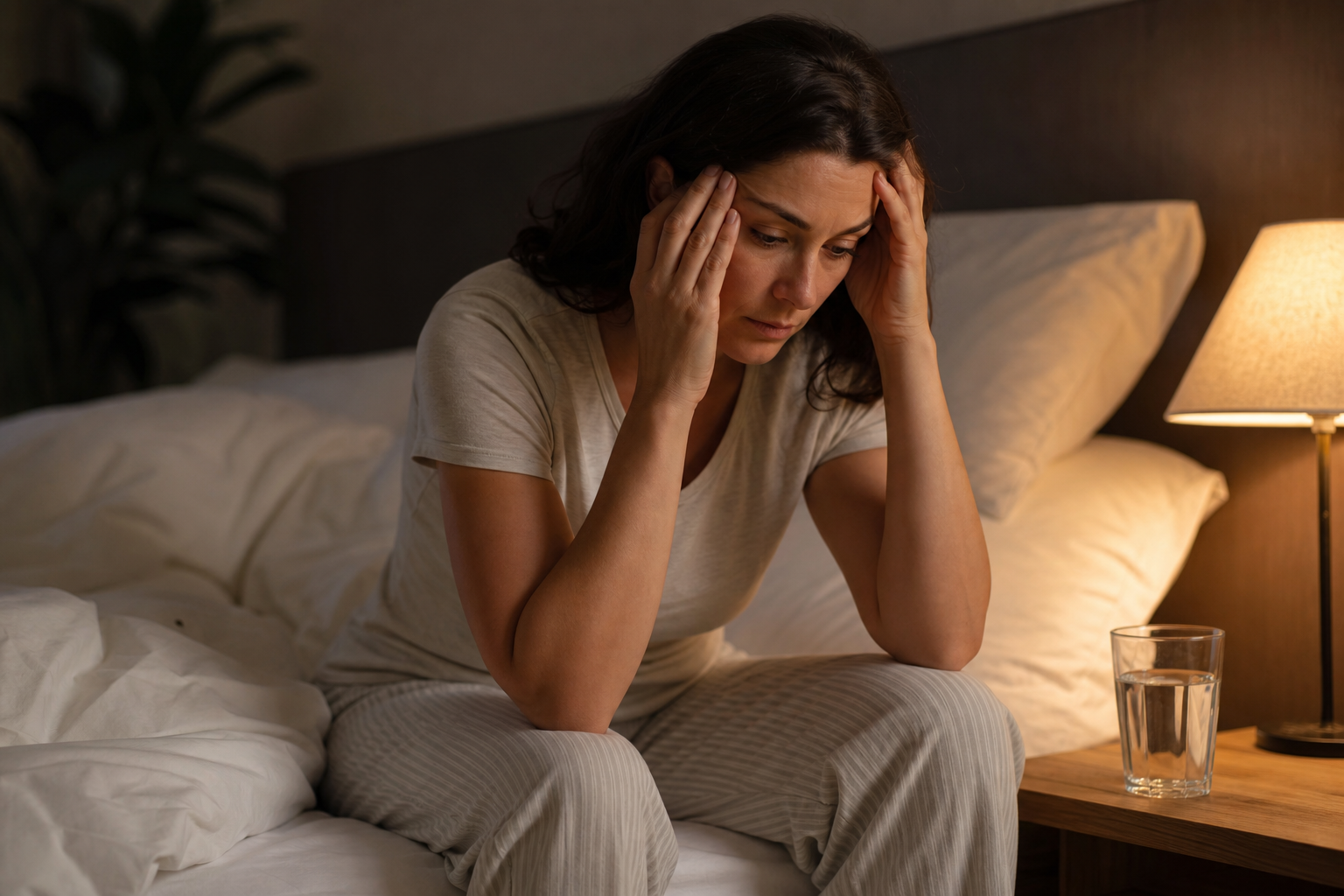
The mechanism is twofold. First, progesterone, which has natural sedative and anxiolytic properties, declines, reducing its calming effect on the central nervous system. Second, fluctuating estrogen levels can interfere with thermoregulation, leading to night sweats that wake you up. Additionally, lower estrogen can affect serotonin production, a neurotransmitter involved in sleep regulation. Women in their 30s often attribute this to work stress or parenting, but if sleep hygiene practices fail to improve rest, hormonal changes should be considered.
Actionable Steps for Better Sleep: Establishing a cool sleep environment (around 65°F or 18°C) can mitigate night sweats. Avoiding caffeine after noon and limiting blue light exposure before bed are also critical. Some women find relief with magnesium glycinate supplements, which support relaxation, though consulting a doctor is recommended before starting new supplements.
3. Are Mood Swings and Anxiety Increasing?
Emotional volatility is a hallmark of early perimenopause. Sudden feelings of irritability, unexplained crying spells, or heightened anxiety can occur without external triggers. Estrogen influences the production of serotonin and dopamine, the brain’s feel-good
Related reading: Perimenopause Symptoms in Your 30s: 2026 Doctor’s Guide