Best Natural Sleep Aids 2026: Evidence-Based Guide by a Nutritionist
Quick Answer: The most effective natural sleep aids backed by 2026 clinical research include magnesium glycinate, melatonin, L-theanine, valerian root, glycine, ashwagandha, and chamomile. Each compound operates through a unique biological mechanism, ranging from circadian rhythm regulation to cortisol reduction. The optimal choice depends entirely on the root cause of your sleep disturbance, whether it is stress, deficiency, or a disrupted internal clock. For more on holistic habits, see How to Improve Sleep Quality Naturally in 2026.
Best Natural Sleep Aids 2026: 7 Science-Backed Options
You are tired of being tired. You have counted sheep, tried to “clear your mind,” and perhaps stared at the ceiling for hours wondering why rest eludes you. If this resonates, you are not alone. Current data from the Centers for Disease Control and Prevention (CDC) indicates that 1 in 3 adults regularly fails to obtain the recommended 7 hours of restorative sleep. Chronic sleep deprivation is linked to increased risks of cardiovascular disease, obesity, type 2 diabetes, and cognitive decline. In 2026, the focus has shifted from merely sedating the body to optimizing neurochemistry for genuine restoration.
While standard sleep hygiene advice, such as avoiding blue light and maintaining a cool room, is foundational, it often fails when your neurochemistry simply will not switch off. This is where scientifically-supported natural sleep aids become essential. This guide cuts through the marketing noise to reveal what actually works, the precise biological mechanisms behind them, and how to use them safely based on the latest peer-reviewed studies. For broader wellness context, you might also explore Best Weight Loss Supplements 2026, as metabolic health impacts sleep.
Last updated: April 25, 2026.
Disclosure: This article contains affiliate links. We may earn a commission at no extra cost to you if you purchase through our links. (source: NIH health information)
Estimated Reading Time: 12 minutes
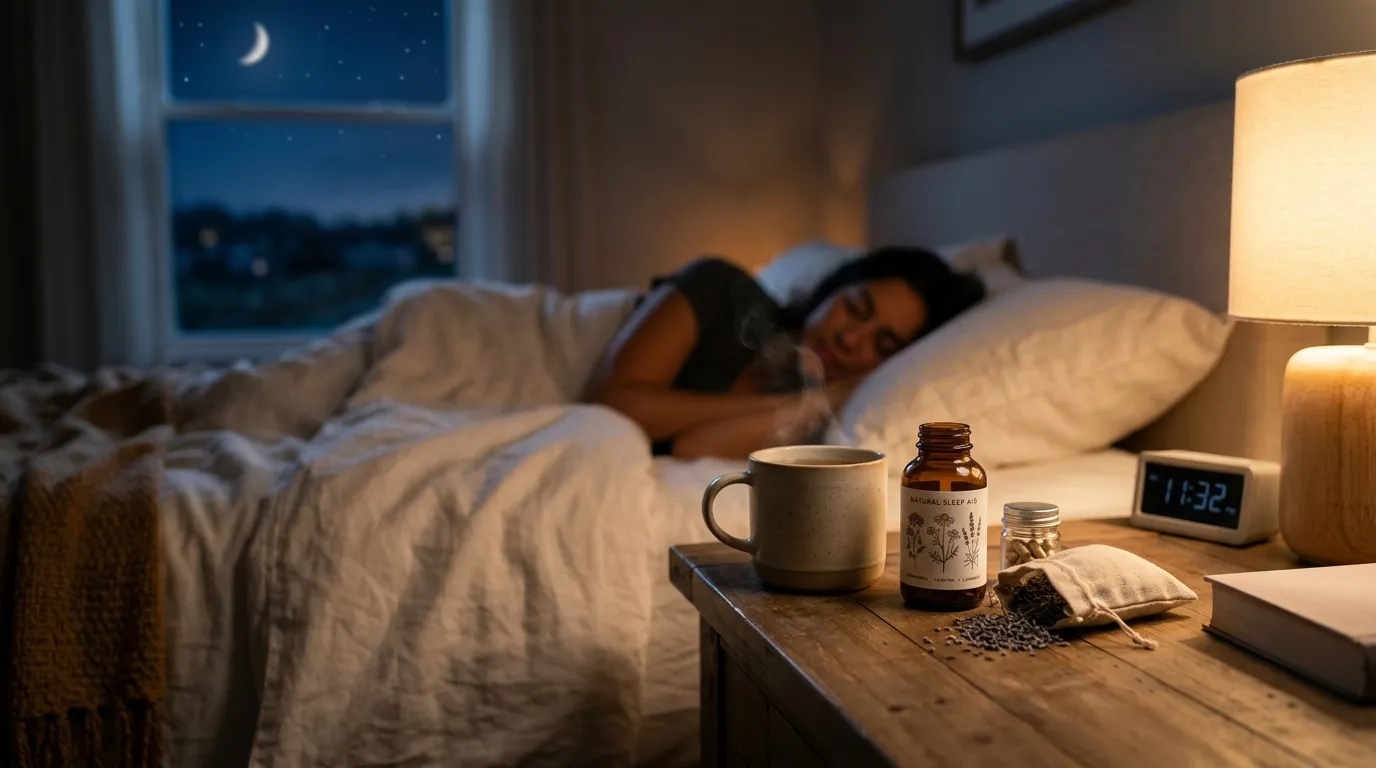
What Are Natural Sleep Aids and How Do They Work?
Natural sleep aids are bioactive compounds, typically derived from botanical sources or found endogenously in the human body, utilized to support the onset and maintenance of restful sleep. Unlike prescription hypnotics (such as zolpidem or benzodiazepines), which often induce sedation by broadly depressing the central nervous system, natural aids tend to work more gently. They support the body’s innate sleep-wake cycles rather than forcing unconsciousness, reducing the risk of next-day grogginess or dependency. (source: CDC healthy living guidelines)
These supplements generally function through one of three primary pathways:
- Circadian Regulation: Signaling the brain that it is time to sleep by mimicking hormonal cues. Melatonin is the prime example here, acting as the body’s internal clock handler.
- Neurotransmitter Modulation: Increasing calming chemicals like GABA (gamma-aminobutyric acid) or serotonin to quiet neural activity. Magnesium, L-Theanine, and Valerian root operate primarily through this mechanism.
- Stress Adaptation: Lowering cortisol levels and regulating the Hypothalamic-Pituitary-Adrenal (HPA) axis to prevent stress-induced wakefulness. Adaptogens like Ashwagandha excel in this category.
It is critical to understand that in the United States, these products are regulated as dietary supplements under the Dietary Supplement Health and Education Act (DSHEA). This means the FDA does not evaluate them for safety or efficacy prior to market release. Consequently, the burden of quality falls on the consumer to select reputable brands that utilize third-party testing for heavy metals and potency verification. Look for seals from USP, NSF, or ConsumerLab when purchasing.
Which Natural Sleep Aid Is Best for Your Specific Needs?
Not all insomnia is created equal. Choosing the right supplement requires diagnosing the underlying barrier to sleep. If your issue is falling asleep due to jet lag, melatonin is the logical choice. However, if you wake up frequently due to blood sugar fluctuations or physical tension, magnesium or glycine may be superior. Understanding your specific sleep profile prevents wasted money and ensures faster results.
Consider your primary symptom:
- Can’t fall asleep? Try Melatonin (0.5mg to 3mg) or L-Theanine (200mg).
- Can’t stay asleep? Try Magnesium Glycinate (300mg) or Valerian Root (600mg).
- Wake up tired? Try Glycine (3 grams) or Ashwagandha (300mg).
- Racing thoughts? Try L-Theanine or Chamomile extract.
Below, we detail the top evidence-based options categorized by their primary mechanism of action, ensuring you can match the solution to your specific biological hurdle.
| Supplement | Primary Benefit | Recommended Dosage | Best Timing |
|---|---|---|---|
| Magnesium Glycinate | Muscle Relaxation | 200mg – 400mg | 30 mins before bed |
| Melatonin | Circadian Rhythm | 0.3mg – 3mg | 90 mins before bed |
| L-Theanine | Anxiety Reduction | 200mg | 30 mins before bed |
| Valerian Root | Sedation | 300mg – 600mg | 60 mins before bed |
| Ashwagandha | Cortisol Reduction | 300mg – 600mg | Evening or Morning |
What Are the Top Evidence-Based Supplements for 2026?
To help you navigate the overwhelming market, we have categorized the top performers based on clinical efficacy and safety profiles updated for 2026 standards. These selections prioritize bioavailability and minimal side effects.
1. Magnesium Glycinate
Magnesium is involved in over 300 enzymatic processes, including those that regulate sleep. However, the form matters. Magnesium oxide is poorly absorbed and often causes digestive distress. Magnesium glycinate is chelated with glycine, an amino acid that itself has calming properties. This combination enhances bioavailability and promotes muscle relaxation without the laxative effect. Clinical studies suggest dosages between 200mg to 400mg taken 30 minutes before bed can significantly improve sleep efficiency and reduce nighttime awakenings. It is particularly useful for those with restless leg syndrome.
2. Melatonin
Often misunderstood as a sedative, melatonin is a hormone that signals darkness to the brain. It is most effective for circadian rhythm disruptions, such as jet lag or shift work disorder. For general insomnia, less is more. Doses exceeding 3mg can sometimes desensitize receptors. Start with 0.3mg to 1mg taken 90 minutes before your target bedtime. Extended-release formulations are preferable for those who struggle with staying asleep rather than falling asleep. Consistency in timing is key for efficacy.
3. L-Theanine
Found naturally in green tea, L-Theanine promotes relaxation without drowsiness by increasing alpha brain waves. It is particularly effective for individuals whose sleeplessness is driven by anxiety or an inability to quiet the mind. A dosage of 200mg is standard. It pairs exceptionally well with magnesium, creating a synergistic effect that calms the nervous system without causing morning grogginess. This makes it a favorite among professionals who need mental clarity the following day.
4. Valerian Root
Valerian root has been used for centuries as a sedative herb. It works by increasing GABA levels in the brain, similar to how some prescription anxiety medications function, but with a milder effect profile. Studies indicate that taking 300mg to 600mg of valerian root extract about an hour before bed can reduce the time it takes to fall asleep. Users should be aware of its distinct earthy odor, though capsule forms mitigate this issue.
5. Ashwagandha
As a premier adaptogen, Ashwagandha (Withania somnifera) helps the body manage stress. High cortisol levels at night are a common culprit for wakefulness. By regulating the HPA axis, Ashwagandha lowers evening cortisol, allowing the body to transition into sleep mode naturally. A dosage of 300mg to 600mg of a standardized extract (like KSM-66) is recommended. It is best taken consistently over several weeks to build up its stress-buffering effects.
Are There Safety Concerns or Interactions to Consider?
While natural, these compounds are biologically active. Magnesium can interact with certain antibiotics, and melatonin may affect blood pressure medications. Ashwagandha is not recommended for those with autoimmune conditions or pregnant women without medical supervision. Always consult your healthcare provider before starting a new regimen, especially if you are taking prescription medications. Furthermore, cycling supplements (taking breaks every few months) can prevent tolerance buildup.
It is also vital to consider lifestyle factors. Supplements work best when paired with good sleep hygiene. This includes maintaining a consistent sleep schedule, ensuring your bedroom is dark and cool, and limiting caffeine intake after 2 PM. Without these foundational habits, even the best natural sleep aids may struggle to produce optimal results. Combining supplementation with behavioral changes offers the highest probability of long-term success.
In 2026, wearable technology often tracks sleep stages. If you use a smart ring or watch, monitor how these supplements affect your deep sleep and REM cycles rather than just total time in bed. Some sedatives increase total sleep time but reduce sleep quality. Natural aids generally support healthier sleep architecture, preserving the restorative stages your body needs for recovery.
Ultimately, the goal is not just to sleep, but to wake up refreshed. By understanding the specific mechanism of each aid, you can tailor your approach to your body’s unique needs. Start with the lowest effective dose, prioritize consistency, and view these supplements as tools to support a holistic lifestyle rather than magic bullets.
Frequently Asked Questions
Can I take multiple natural sleep aids together?
Yes, stacking is common. Magnesium and L-Theanine are frequently combined safely. However, avoid combining multiple sedative herbs like Valerian and Kava simultaneously without professional advice, as this can lead to excessive drowsiness.
How long does it take for natural sleep aids to work?
Acute aids like Melatonin and L-Theanine work within 30 to 90 minutes. Adaptogens like Ashwagandha may take 2 to 4 weeks of consistent use to show significant improvements in sleep quality and stress reduction.
Are natural sleep aids addictive?
Generally, no. Unlike prescription benzodiazepines, natural supplements like magnesium and glycine do not create physical dependency. However, psychological reliance can occur, so it is best to use them as part of a broader sleep hygiene strategy.
Can children take natural sleep aids?
Parents should exercise extreme caution. Melatonin is sometimes used for children with specific disorders, but only under pediatrician supervision. Most herbal aids are not tested for safety in minors.
What is the best time to take magnesium for sleep?
For sleep purposes, magnesium glycinate is best taken 30 to 60 minutes before bedtime. This allows peak blood levels to coincide with your attempt to fall asleep, maximizing muscle relaxation benefits.